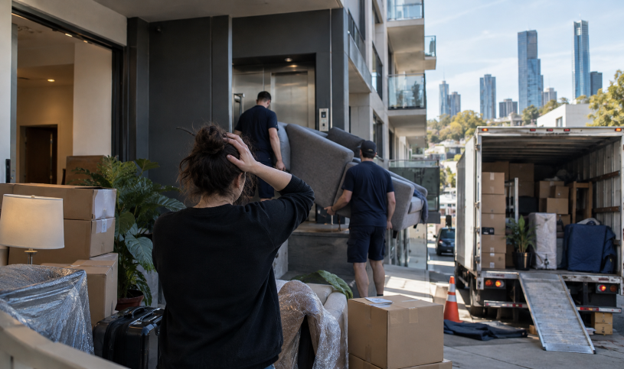
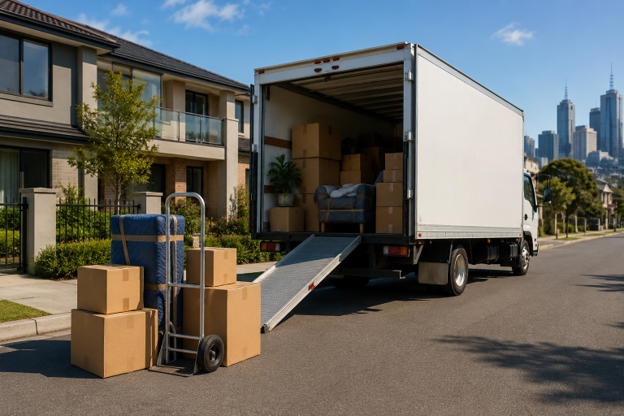
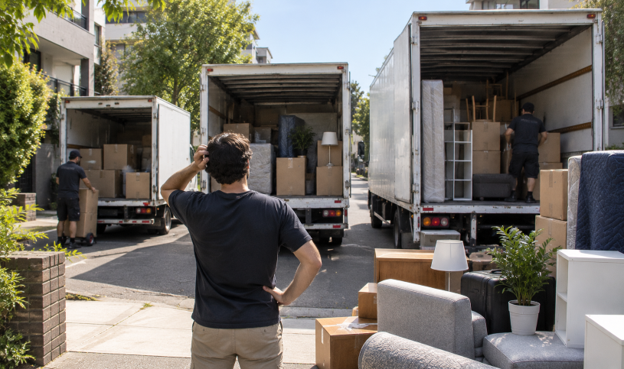
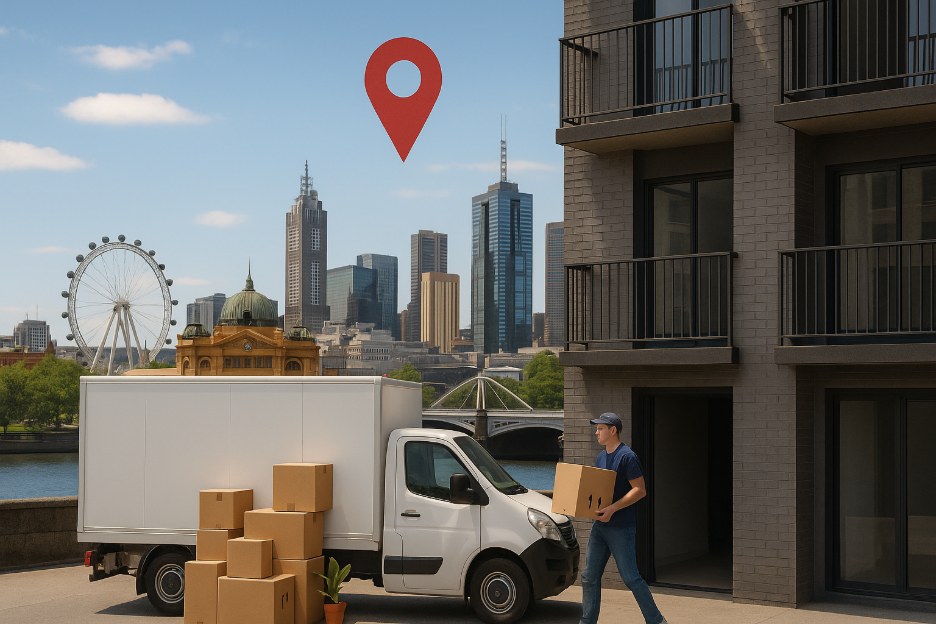
Parking is the part of a Melbourne move that trips up the most people, not the packing. A truck that can't legally stop outside your building costs you time, money, and sometimes a fine before a single box has moved.
This guide explains how parking permits work, how clearways operate, and what actually happens if a removalist truck gets towed, so your Melbourne movers can get in, load or unload, and leave without a ticket on the windscreen.
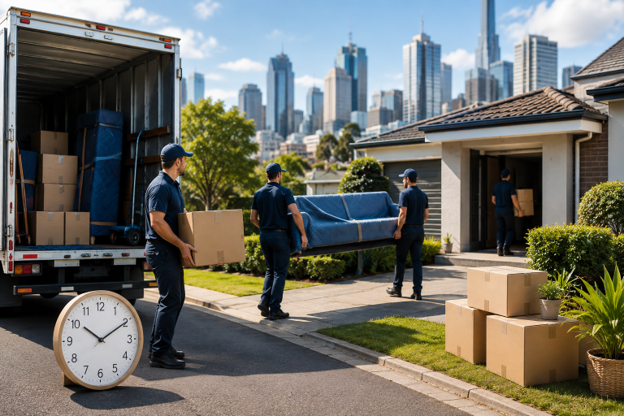
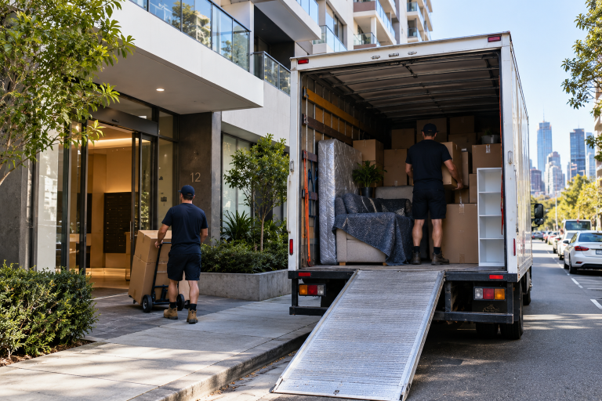
A removalist truck is a large, slow-loading vehicle that typically needs 20 to 60 minutes stopped directly outside a property, sometimes longer for a full house move. Most inner Melbourne streets were never designed around that.
Between one and two hour parking limits, resident permit zones, loading zones reserved for commercial deliveries, and clearways that clear the kerb entirely during peak hours, there's a real chance the closest legal park to your front door isn't actually available to you on moving day.
None of these restrictions pause for a move in progress. A truck idling on a double yellow line or in a clearway is treated exactly the same as any other illegally parked vehicle, which means a fine, and in clearway zones, potential towing while your belongings are still on board.
Before deciding whether you need a permit, it helps to know what each sign actually means. These are the restriction types you'll most commonly encounter around Melbourne homes and apartment buildings.
| Restriction | What It Means | Can a Moving Truck Stop Briefly? |
|---|---|---|
| Time-limited parking (e.g. 1P, 2P) | You can park for the stated number of hours, ticket or app payment often required | Yes, but only within the time limit, and it still needs to be paid or ticketed like any other vehicle |
| Loading zone | Reserved for goods vehicles loading or unloading, usually with a time cap (e.g. 30 minutes) | Often yes, since removalist trucks fall under this use, but check the exact time cap and hours on the sign |
| No standing | No stopping at all, even briefly, except to set down or pick up passengers | No, this includes moving trucks |
| No parking | Brief stops for loading/unloading or dropping passengers are allowed, but the driver can't leave the vehicle unattended for long | Only for very short stops; not suitable for a full load |
| Permit zone (resident permit parking) | Only vehicles displaying a valid resident or visitor permit for that zone can park | No, unless you hold a valid permit for that specific zone |
| Clearway | No stopping or parking at all during the signed times (or 24/7 if no time is shown) | Never during clearway hours |
| Disabled parking | Reserved for vehicles displaying a valid disability parking permit | No |
If none of the available legal parking options work for your load, size of truck, or the length of time you'll need, that's the point where a reserved parking permit becomes worth arranging.

A reserved parking permit is official council approval to hold a specific parking bay, or several bays, for a set window of time. Under some circumstances, the council will temporarily change the parking signage on your street for the booked period, or issue an exemption permit that lets your vehicle bypass the normal time limit or fee for that bay.
This is a short-term parking permit used for events, film shoots, removals, building maintenance and other activities with specific parking needs.
You'll typically want one of these if any of the following apply:
Reserved parking can't be used to hold space for non-vehicle equipment, such as skip bins, cranes, or scissor lifts. The City of Melbourne issues a separate permit for occupation of public space for those activities. If your move involves a crane lift for furniture through a balcony or window, or any equipment placed on the footpath or road, ask your council about a street or footpath occupation permit as well.
The City of Melbourne covers the CBD, Docklands, Southbank, Carlton, East Melbourne, Kensington, North Melbourne, West Melbourne, and Parkville, among other central suburbs. Here's how the process works.
If you contact the council directly, the reserved parking team can be reached at reservedparking@melbourne.vic.gov.au
Here's the part most guides skip, the City of Melbourne's process only applies within its own municipal boundary. Every other council runs its own system, with its own name for the permit, its own lead time, and its own fee structure. If your move is in the inner or middle suburbs, check with the relevant council directly rather than assuming CBD rules apply.
| Council Area (Example Suburbs) | What to Check |
|---|---|
| City of Melbourne (CBD, Docklands, Southbank, Carlton, Parkville) | Reserved parking permit, 5+ business days' notice, resident discount available |
| City of Yarra (Fitzroy, Collingwood, Richmond, Abbotsford) | Own temporary parking permit process; contact council for current lead times and fees |
| City of Stonnington (South Yarra, Prahran, Toorak, Malvern) | Own temporary/removalist parking process; apply well ahead in high-density streets |
| City of Port Phillip (St Kilda, Albert Park, South Melbourne) | Issues its own infringements and towing arrangements separately from Transport Victoria |
| City of Boroondara (Hawthorn, Camberwell, Kew) | Clearway enforcement partly managed with the Department of Transport and Planning; check current clearway maps before booking a street park |
| Merri-bek (Coburg, Brunswick, Pascoe Vale) | Council-issued permits plus separate state-run clearway enforcement on major roads |
Two things are consistent everywhere:
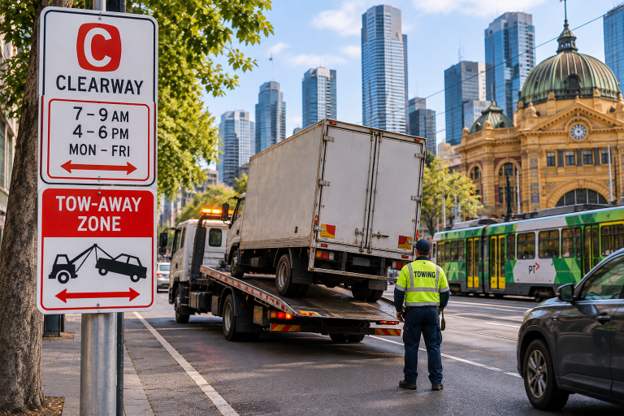
A clearway is a stretch of road where stopping and parking is banned during the times shown on the sign. If there are no times on the sign, the clearway applies 24 hours a day. Clearways exist to keep traffic (and Melbourne's extensive tram network) moving during busy periods, and they are enforced strictly because a single stopped vehicle can back up an entire arterial road or tram line. (Source)
The critical difference from an ordinary parking restriction is the consequence. A vehicle illegally parked in an ordinary restricted zone generally isn't towed, but a vehicle left in a clearway or tow-away zone during restricted times can be towed and impounded, on top of receiving a fine.
Within roughly 20 kilometres of the Melbourne CBD, many former clearways have specifically been converted into tow-away zones, meaning towing is the default response rather than the exception.
For a moving truck, clearways matter because:
Before booking a moving time, check the street your truck will actually stop on, not just your building's address, since the truck may need to park on an adjoining main road if your own street is too narrow.
If a truck is towed from a clearway, here's the practical process:
This is exactly why checking clearway signage before you book a moving time, rather than after the truck is loaded and parked, matters. A tow during a move doesn't just cost money, it stops the job entirely until the vehicle and everything in it is recovered.
Parking fines in the City of Melbourne range from $104 to $209 for the 2026-27 financial year, depending on the specific offence. The amount is set by penalty units under Victoria's Road Rules, which the state government determines each year, not the council, so the same offence generally attracts a similar fine regardless of which Melbourne suburb you're in.
Parking enforcement is governed by the Road Safety Road Rules 2017 (Vic), with the Infringements Act 2006 (Vic) setting out how fines are reviewed and enforced. Practically, this means:
Because the fine amount depends on the exact offence and is set annually, always check your specific infringement notice or the official Department of Transport and Planning page for the current figure rather than relying on a fixed number from any blog, including this one.
If you're moving into or out of an apartment tower or office building, street parking is often only half the problem. Many mid- and high-rise buildings in Docklands, Southbank, and the CBD require you to book a service lift and, if available, a loading dock time slot in advance through building management. Contacting the building manager a week or more ahead is a sensible default, since popular buildings can have limited lift booking slots, especially on weekends.
Before your move date, it's worth confirming with your building manager:
If the building has no loading dock, treat street parking as the only option and follow the council permit process above well ahead of time.
Use this as a final run-through before the truck arrives:
Parking is a logistics problem, not a formality, and it's worth solving before moving day rather than on it. Book your permit as early as the relevant council allows, check the exact clearway times for your street, and confirm any building access requirements separately from street parking. If you'd rather hand this off entirely, an experienced Melbourne removalist can often flag which permits your specific address needs and help time the move around clearway hours, so the only thing you have to think about on the day is the move itself.
Do removalist trucks get any automatic exemption from Melbourne parking rules?
No. A moving truck is treated the same as any other vehicle under Victorian road rules. The only way to legally hold or bypass a restriction is through a permit issued by the relevant council.
Can I get a parking permit at short notice if I'm moving in a few days?
It depends on the council. The City of Melbourne asks for more than five clear business days' notice, and some councils may accept shorter notice at their discretion, sometimes with a priority processing fee. Applying as early as possible is the safest approach.
Does a reserved parking permit let me park in a clearway?
Generally no. Reserved parking permits reserve or exempt specific bays from standard time limits and fees, but clearways are a separate, strictly enforced restriction. Always check whether your street is a clearway before assuming a reserved permit covers it, and ask your council directly if you're unsure.
Who do I contact if my moving truck was towed from a clearway?
Call Nationwide Towing on 13 48 69 to confirm where the vehicle is held. If the move was within the City of Melbourne or City of Port Phillip, contact that council directly, since they run their own towing and infringement processes.
Is there one parking permit that covers all of Melbourne?
No. Each local council runs its own permit system, fees, and lead times. A permit from the City of Melbourne doesn't apply in a neighbouring council area, so check with the specific council for your address.
LOCATIONS & SUBURBS
From moving houses to office relocation services in records time, we’ve got the lowest removalist costs in Melbourne – Book your next move with us online today! For our interstate removalists – try Move4Cheap!
© Copyright 2024 - Melbourne Cheap Movers - All Rights Reserved | Designed, Marketing & Managed by Crazy Rise