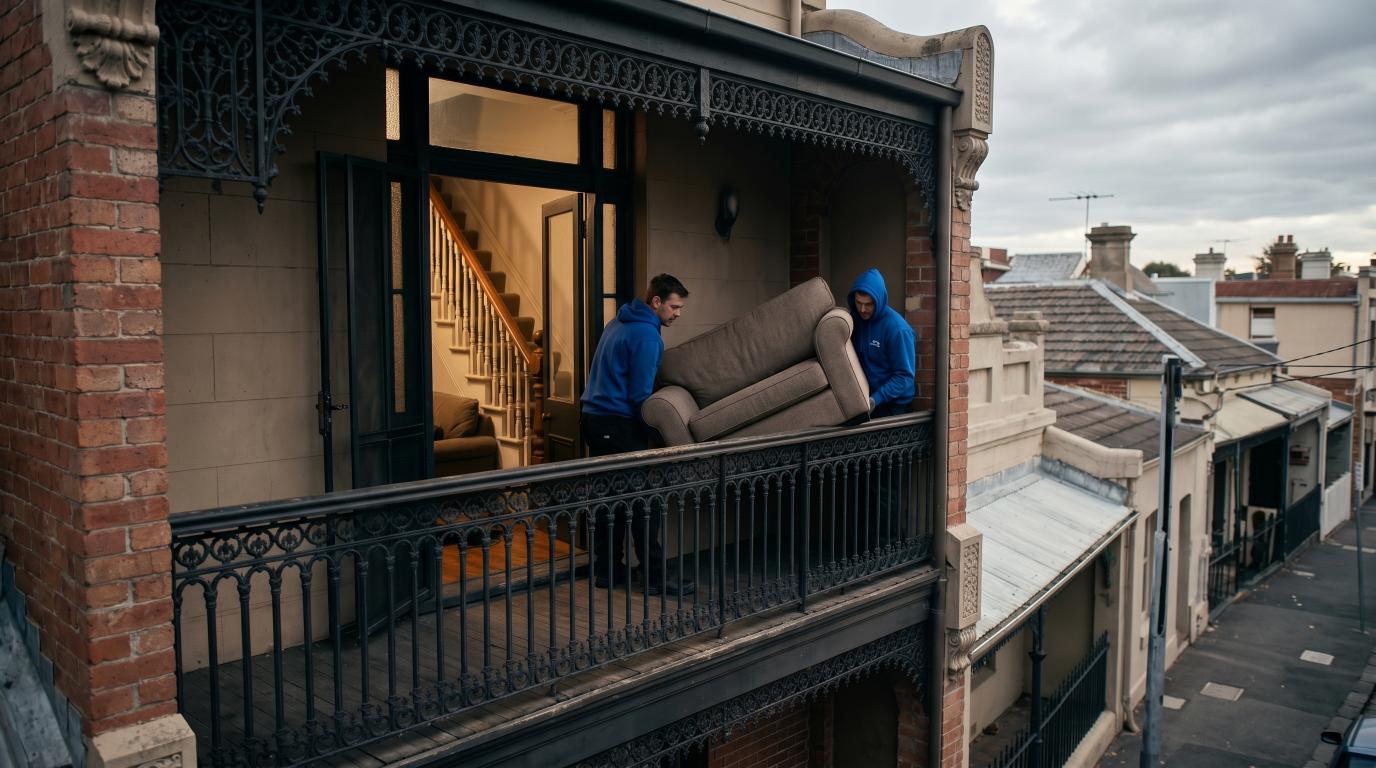
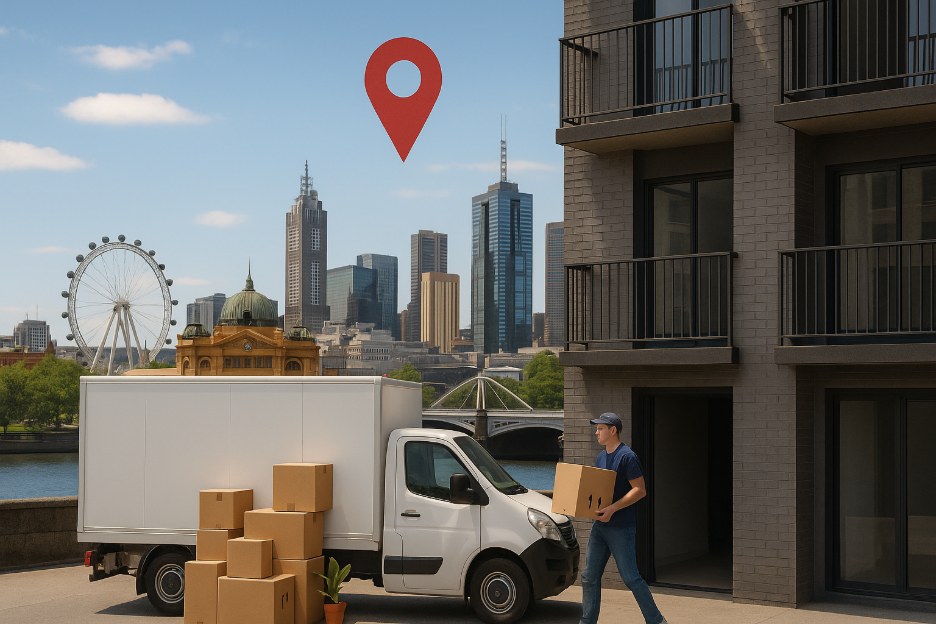
Renting a truck that's too small usually means two trips instead of one, plus paying for the extra hours it takes to make that happen. Renting one that's too big means paying for space you never use, and trying to reverse something the size of a small bus down a narrow terrace street in Fitzroy or Richmond.
Getting the size right saves money and stress on moving day, whether you're doing it yourself or booking help. Most Melbourne Movers size their trucks by tonnage and cubic metres rather than length in feet, which is where first-time movers researching truck sizes online often get tripped up.
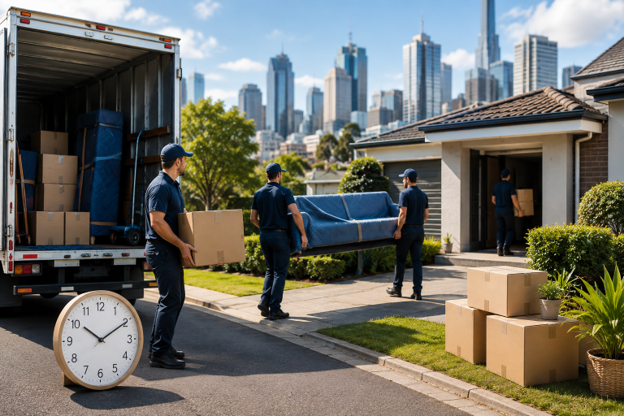
For a two-bedroom home, a 4 to 6 tonne truck (roughly 20 to 35 cubic metres) is generally enough to fit your furniture, appliances, and boxes in one trip.
A three-bedroom home usually needs a 6 to 8 tonne truck (around 35 to 45 cubic metres), stepping up to 8 to 10 tonnes if you have a full garage, larger furniture, or more belongings than average.
The right size ultimately comes down to how much you own and how it's packed, not just your home's bedroom count.
Australian removalists size trucks by gross vehicle mass (GVM) in tonnes and by cargo capacity in cubic metres, not by length in feet like the US rental guides many people stumble across online. That's worth knowing before comparing numbers from overseas sites.
A handy rule of thumb: about ten standard moving boxes (roughly 60 x 40 x 40cm each) fill close to one cubic metre. A 6-tonne truck with around 35 cubic metres of space can generally carry a full lounge suite, a queen bed, a fridge, and well over a hundred boxes in one run.

A two-bedroom home fits comfortably into a 4 to 6 tonne truck, and a three-bedroom home usually needs a 6 to 8 tonne truck, sometimes stretching to 8 to 10 tonnes if the home is fully furnished with a garage's worth of extras. These figures assume a reasonably furnished home with standard-size furniture and an average number of boxes.
| Home Size | Typical Truck Size | Approx. Volume | What It Usually Fits |
|---|---|---|---|
| Studio / 1 bedroom | 3–4.5 tonne | 15–20 m³ | Bed, sofa, small dining set, around 40 boxes |
| 2 bedroom | 4–6 tonne | 20–35 m³ | Two bedroom suites, lounge suite, dining table, fridge, 60–80 boxes |
| 3 bedroom | 6–8 tonne | 35–45 m³ | Three bedroom suites, full lounge and dining setup, appliances, 100+ boxes |
| 4 bedroom | 8–10 tonne | 45–58 m³ | Full household plus garage or shed items, 150+ boxes |
| 5+ bedroom / small office | 10–12 tonne | 58 m³+ | Large households or small office fit-outs |
If your two-bedroom place has a home office, a large sectional, or years of stuff stashed in the garage, it's worth asking your removalist whether a 6 to 8 tonne truck makes more sense than the standard 4 to 6 tonne recommendation.
It's cheaper to book the right size once than to pay for a second load. Our house removals page breaks down how crew size and truck size are usually matched together for jobs like this.

Yes. In Victoria, any vehicle with a gross vehicle mass (GVM) over 4.5 tonnes requires a heavy vehicle licence rather than a standard car licence, as set out by Transport Victoria. A standard car licence lets you drive vehicles up to 4.5 tonnes GVM and seat up to 12 adults, which covers most small pantech trucks used for studio, one-bedroom, and light two-bedroom moves.
This is one of the practical reasons DIY truck rental works well for smaller moves but becomes less straightforward for a typical three-bedroom-plus home. The truck size that comfortably fits a family home usually sits above that 4.5 tonne threshold, so a licensed driver is legally required. It's a big part of why families and larger households tend to book a crew rather than self-drive, especially when the alternative is squeezing a full house into an undersized 4.5 tonne truck and doing two trips anyway.
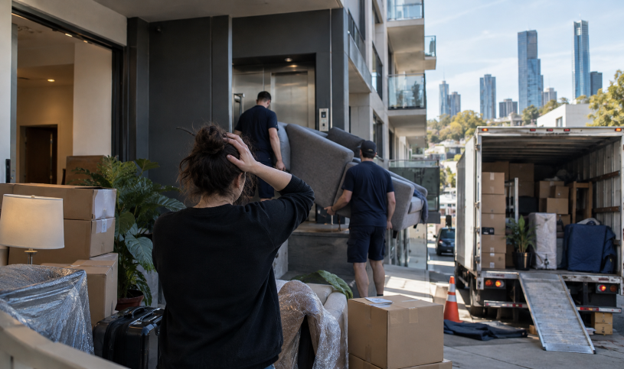
Truck size in Melbourne isn't only about how much you own, it's also about where the truck can legally stop and how well it fits down your street. Inner-city suburbs, apartment loading docks, and narrow laneways can rule out a larger truck even when your furniture volume calls for one.
If you're moving into or out of an apartment building or a CBD-adjacent street, check whether the building has its own loading dock or the truck will need to park on the road.
Many inner Melbourne streets have restricted or metered parking, and the City of Melbourne issues reserved parking permits for activities like removals, generally requiring at least five clear business days' notice. Without one, a truck parked outside a permitted bay for an extended loading window can attract a fine, even for a short stop.
Clearance height matters too. Most removal trucks sit between 3 and 4 metres tall, which can be a problem if your street or building has a low awning, boom gate, or tree canopy along the route. Our service area page lists the suburbs typically covered, a useful starting point for checking access before the truck arrives.

A few situations are worth flagging before you commit to the "standard" size for your bedroom count:
Bedroom count is a reasonable starting point, but it's the volume of what you actually own, plus where and how you're moving it, that decides the right truck size. A two-bedroom home with a decade of accumulated storage can easily out-load a lightly furnished three-bedroom place. Rather than locking in a size because it matches your address, run through an honest inventory, or have it assessed by whoever is doing the move. That single step does more to get the size right than any chart, including this one.
LOCATIONS & SUBURBS
From moving houses to office relocation services in records time, we’ve got the lowest removalist costs in Melbourne – Book your next move with us online today! For our interstate removalists – try Move4Cheap!
© Copyright 2024 - Melbourne Cheap Movers - All Rights Reserved | Designed, Marketing & Managed by Crazy Rise