Renting adds a layer that most "how to choose a removalist" guides skip entirely. You are not just picking a mover, you are coordinating that booking around a lease end date, a bond, and sometimes a building manager who has their own rules about trucks and lift access.
Get any of that wrong and the cost isn't just a bad moving day, it's money out of your bond or a scramble to find a truck on short notice. This guide walks through what to actually check, in the order it matters, starting with your lease.
If you're comparing removalists in Melbourne, the checks below apply whether you're moving a studio apartment in the CBD or a family home in the outer suburbs, and they're written specifically around the situation renters face that owner-occupiers don't: a fixed exit date, a condition report, and a bond that depends on leaving the property in good order.
Before you commit to any removalist, confirm five things: your lease notice period and move-out date, the company's ABN and insurance, whether the quote is hourly or fixed, what access arrangements your building requires, and how the company handles damage claims.
Get these five right and most of the common moving day problems disappear before they start.

This is the step homeowner-focused guides miss. As a tenant, your move-out date isn't fully yours to choose.
Under Victorian tenancy law, ending a fixed-term or periodic agreement requires written notice, and the required notice period depends on why the tenancy is ending.
Consumer Affairs Victoria's guidance on moving out sets out these notice requirements and confirms that if your rental provider wants to end the agreement, they must give you a valid, written notice to vacate with the correct amount of notice.

Anyone can put a "professional removalist" sign on a truck. What actually separates a legitimate operator from a risk is paperwork, and you're entitled to ask for it before you pay a deposit.
Check for an active ABN. Every legitimate Australian removalist operates under a registered Australian Business Number. You can search it independently through the government's ABN Lookup tool and confirm it matches the trading name on their website or quote.
Ask about AFRA accreditation, but understand what it does and doesn't mean. The Australian Furniture Removers Association is Australia's peak industry body for the removals sector.
AFRA states that its accredited members are audited against standards covering training, compliance and insurance, and that it represents over 250 member businesses across the country.
That's a useful trust signal, but it also means most Melbourne removalists operate outside AFRA membership, so accreditation isn't the only thing worth checking, just the fastest one to verify.
| Insurance Type | What It Covers | Why It Matters to a Renter |
|---|---|---|
| Transit insurance | Your belongings while loaded on the truck | Protects your furniture and boxes between the two properties |
| Public liability insurance | Damage to either property during the move | Covers marks on walls, doorframes, lifts or floors, which can otherwise become a dispute at your exit inspection |
Ask to see a certificate of currency for both. A removalist who can produce this without hesitation is generally a safer bet than one who talks around the question.
The cheapest hourly rate is not the same thing as the cheapest total bill. A slow, understaffed, or poorly equipped crew can easily turn a low rate into a longer job and a higher final cost.
When comparing quotes, give every company the same information: number of bedrooms, bulky items (pianos, fridges, treadmills), stairs or lifts, parking distance from the door to the truck, and your preferred date.
Ask each quote to clarify:
A like-for-like comparison, rather than picking the lowest number on a page, is what actually protects your budget.
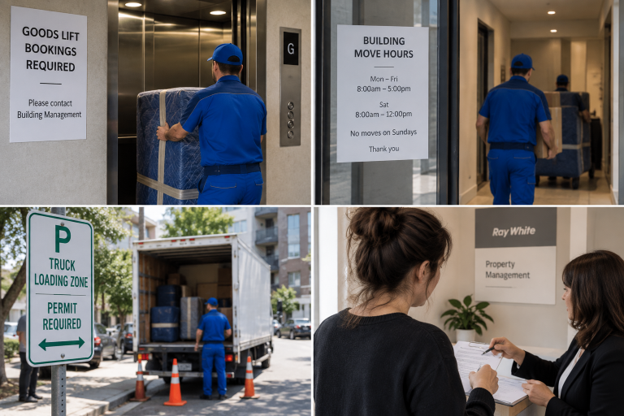
This is where rental properties, especially apartments, create friction that a standalone house doesn't. Sort these out with your building manager or real estate agent before the truck arrives, not on the day.
Lift bookings: Many apartment buildings require the goods lift to be booked in advance, sometimes with a refundable deposit for lift padding or protective covers.
Building move windows: Some buildings only permit moves during set hours, so confirm this with the body corporate or managing agent early.
Parking permits: Kerb space is tight in many inner-Melbourne streets. Some councils require a parking bay occupation permit for a truck, and a permit doesn't always guarantee a specific bay is free on the day.
Real estate agent notice: If you're moving out of a managed rental, let your agent know your moving date and confirm any access arrangements for the outgoing inspection.
Sorting this in advance avoids paying a crew to sit and wait, which is one of the most common and avoidable causes of an inflated final bill.
This is the part that's specific to renting, and it's worth taking seriously. In Victoria, your bond, generally equal to one month's rent, is held by the Residential Tenancies Bond Authority, not your landlord.
When you move out, your rental provider or agent must complete the exit section of your condition report, comparing the property's state to the entry report from when you moved in.
Damage that happens during your move (a scuffed wall from a dragged sofa, a dented doorframe from a wide fridge) can show up on that exit report.
That's exactly why the public liability insurance mentioned earlier matters for renters specifically: it's not just about your belongings, it's about the property you're legally responsible for returning in good condition, fair wear and tear aside.
A few habits reduce this risk:
Walk away, or at least ask more questions, if you notice any of the following:
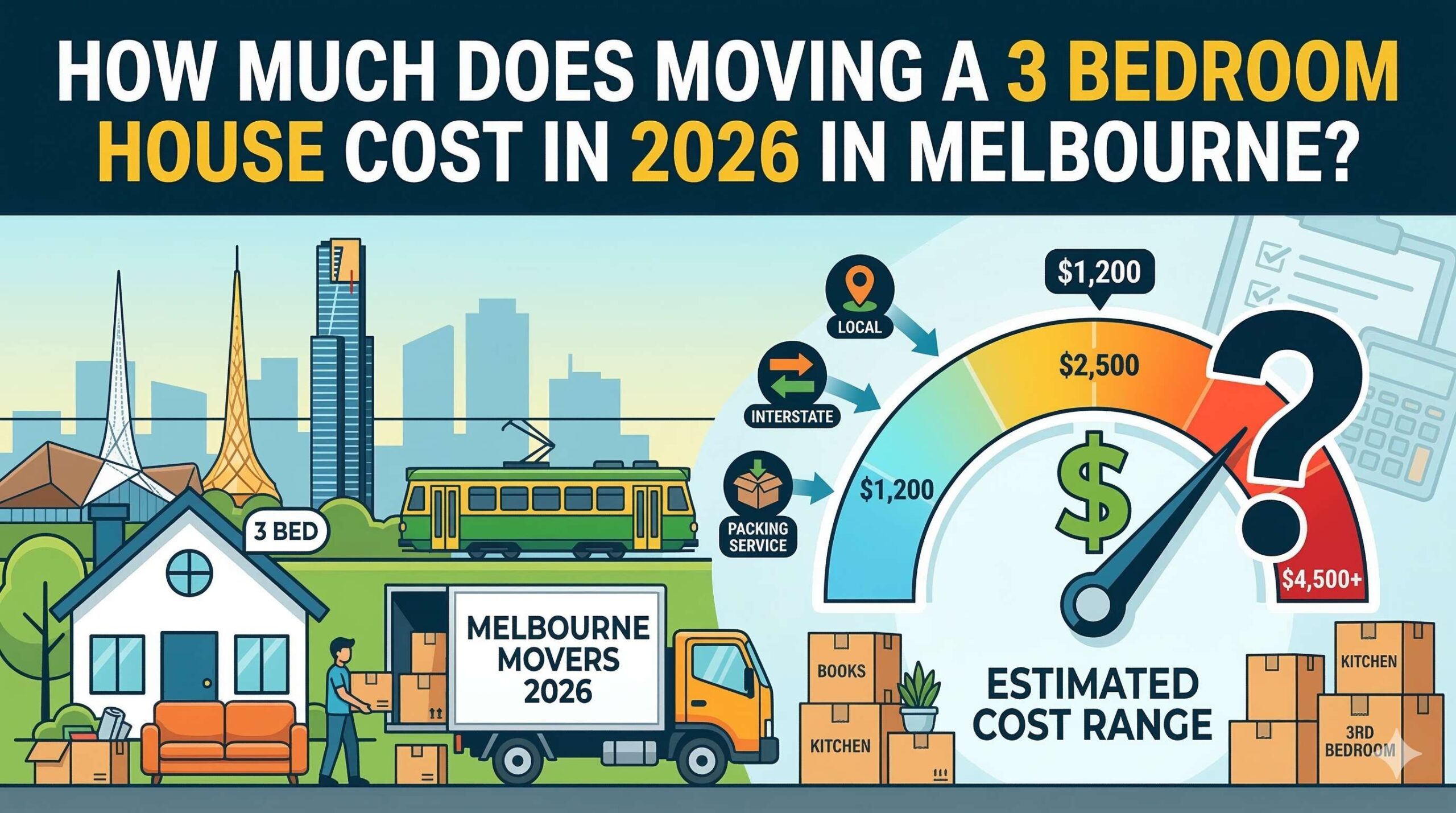
If you'd rather not manage every one of these steps yourself, checking a removalist pricing guide before you request quotes gives you a realistic baseline to compare offers against, and services like getting a fare estimate upfront can save you the back-and-forth of chasing multiple companies individually.
Booking a removalist as a renter isn't just a logistics task, it's tied to your lease, your bond, and a building you don't own. Confirm your notice period first, verify the paperwork second, and sort access before moving day, and the rest of the process becomes far more predictable. The checklist above covers what actually matters; everything else is preference.
How much notice do I need to give before moving out of a Victorian rental?
The required notice period depends on the type of tenancy and the reason it's ending. Consumer Affairs Victoria sets out the specific notice periods for tenants and rental providers, so check your situation against their current guidance before finalising a move-out date.
What insurance should a Melbourne removalist have?
At minimum, transit insurance for your belongings while in the truck, and public liability insurance for damage to either property during the move. Ask for a certificate of currency for both before booking.
Does a removalist need to be AFRA accredited to be trustworthy?
No. AFRA accreditation is a useful, verifiable trust signal, but most Melbourne removalists are not AFRA members. An unaccredited company can still be reliable if it can show a valid ABN, proper insurance, and clear pricing.
What happens if a removalist damages my rental property?
Report it to the removalist immediately in writing and take photos. A removalist's public liability insurance should cover repair costs. Keep this documentation in case it's raised at your exit inspection or affects your bond claim.
When should renters book removalists in Melbourne?
Ideally 3 to 6 weeks before your confirmed move-out date, and earlier if your date falls at the end of the month, since that's when lease turnovers and demand both peak.
LOCATIONS & SUBURBS
From moving houses to office relocation services in records time, we’ve got the lowest removalist costs in Melbourne – Book your next move with us online today! For our interstate removalists – try Move4Cheap!
© Copyright 2024 - Melbourne Cheap Movers - All Rights Reserved | Designed, Marketing & Managed by Crazy Rise