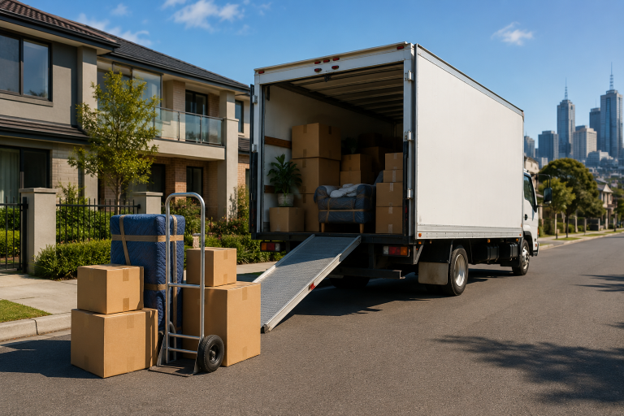
A scratched dining table or a cracked bed frame can turn moving day into a very long week. Most people only learn what their insurance covers after something has already gone wrong.
if a Melbourne removalists damages your furniture through carelessness, you can usually ask for a repair, replacement or compensation under the Australian Consumer Law, and you can also claim on transit insurance if you bought it. If nobody was at fault, such as a truck crash or a storm, consumer law may not help. In that case only transit insurance or your own contents policy will pay.
This guide explains which cover applies, what it typically costs, and how to build a claim that gets paid.
What Is Moving Insurance and Why Does It Matter?
Moving insurance, also called transit insurance or removalist insurance, covers your belongings against loss or damage while they are packed, loaded, driven, unloaded and sometimes stored. It matters because removalists may carry other insurance, such as vehicle cover, but they are not required to insure your items if they damage or lose them.
You can get this protection from three places:
- Your removalist’s transit policy, often added to the quote as an optional extra.
- A standalone moving policy from a specialist insurer.
- Your home contents policy, though some providers restrict transit cover or only include it for an extra premium.
Disputes are common enough to take seriously. Consumer Affairs Victoria received 656 reports about removalists in 2019, rising to 726 in 2020.
How much does moving insurance cost?
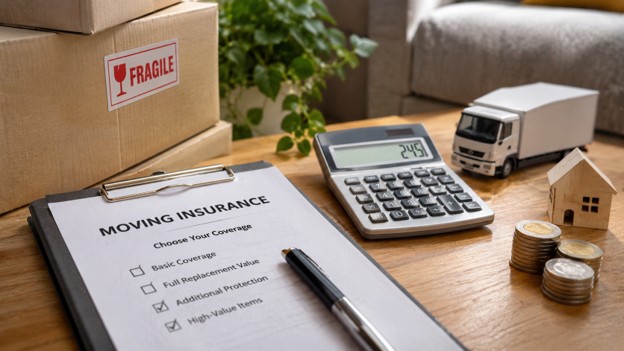
Moving insurance generally costs between 1% and 5% of the declared value of your goods. Sources report a wide spread of rates, from 1% to 5%, so always get the rate in writing.
As a real world reference point, one AFRA accredited Melbourne removalist publishes a Victorian rate of 1.75% of declared value with a $245 minimum premium.
| Declared value of goods | Premium at 1.75% |
|---|---|
| $10,000 | $245 (minimum applies, as 1.75% would be $175) |
| $20,000 | $350 |
| $30,000 | $525 |
| $40,000 | $700 |
These figures come from one provider and will vary by insurer, so use them to compare quotes. A common rule of thumb is to declare roughly $1,000 of contents per cubic metre moved, so a 20 cubic metre household would be around $20,000. Your actual replacement cost is the better number.
Does Removalist Insurance Cover Furniture Damage?
Sometimes. It depends on which type of protection is in play, and “insured” on a removalist’s website does not automatically mean your sofa is covered. Three separate layers can apply.
1. Consumer guarantees (not insurance): Under the Australian Consumer Law, removalists must provide services with due care and skill. If they fail, you can ask for a fix or compensation. But this protection only applies where the removalist’s negligence is established. Cases the removalist could not control fall outside it, for example a tree branch falling on the truck and damaging the contents.
2. The removalist’s goods in transit policy: This is the cover that pays for your furniture. It may be included, optional, or not offered at all. Always ask for the policy document and read the exclusions.
3. Your own contents insurance: Check whether it covers goods in a removalist’s truck, and whether cover ends once items leave your property.
Be careful with verbal assurances about insurance: In a case brought by Consumer Affairs Victoria, the Melbourne Magistrates’ Court found that three removalist companies and two individuals misled customers about the insurance applying to their services. A written policy and a certificate are the only reliable proof.
Public Liability Insurance vs Transit Insurance

Public liability insurance protects a third party from harm caused by the removalist’s business, while transit insurance protects your belongings during the move. They sound similar but pay for different things, and one rarely substitutes for the other.
| Public liability insurance | Goods in transit insurance | |
|---|---|---|
| Protects | Other people and their property | Your furniture and household goods |
| Typical claim | A mover damages an apartment lift, scrapes a neighbour’s car, or a bystander is injured | A wardrobe is cracked in the truck, or goods are lost in a crash or fire |
| Who it benefits | The wider public and property owners | You, as the owner of the goods |
| Does it pay for your damaged furniture? | Usually not, because goods in the removalist’s care are commonly excluded | Yes, within policy limits and conditions |
| Typically arranged by | The removalist, as a business expense | The removalist as an add on, or you separately |
The practical lesson is to ask for both. Public liability helps if the building or a third party is damaged. Transit cover is what you will use if your own furniture is harmed.
What Happens If Movers Damage Your Furniture?
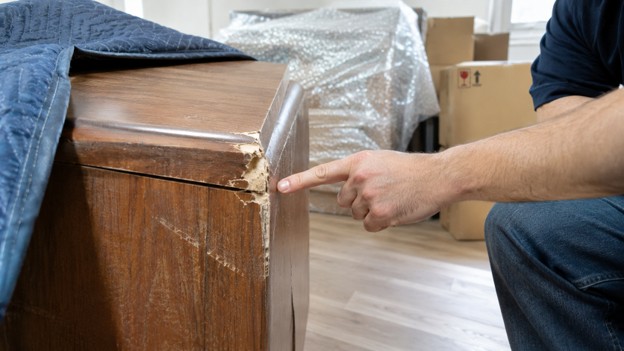
When movers damage your furniture, your claim usually follows one of two paths: a consumer guarantee claim against the removalist if they were careless, or an insurance claim if you have transit cover. Which one works best depends on the cause and the size of the loss. The two scenarios below are hypothetical examples to show how it plays out.
Scenario A: careless handling. Movers carry a solid timber dining table down a narrow Brunswick stairwell and split a leg joint. A furniture restorer quotes $480 to repair it. Because the damage came from lack of care, you can ask the removalist in writing to cover the repair under consumer guarantees. If you bought transit insurance with a $200 excess, you could also claim, though you would absorb the excess. On smaller claims like this, the direct consumer guarantee route is often simpler.
Scenario B: an accident nobody caused. A truck carrying a household from Footscray to Berwick is hit by another vehicle on the Monash Freeway, and a lounge suite and bookcases are damaged. The removalist took reasonable care, so consumer guarantees are unlikely to apply. Transit insurance would respond. Without it you would be relying on your contents policy or pursuing the at fault driver’s insurer, which takes far longer.
| Cause of damage | Likely path |
|---|---|
| Dropped, scraped or poorly secured by movers | Consumer guarantee claim, or transit claim |
| Truck accident, fire, flood or theft | Transit insurance, or your contents policy |
| Damage inside a box you packed yourself | Often excluded or disputed |
| Damage that existed before the move | Generally not covered |
Why your declared value matters
Underinsuring can quietly cut your payout. Some policies apply a rule where if the declared value is below 80% of the true value, the claim is reduced in proportion. Policies differ, so check yours.
Here is a worked example. You declare $20,000 but your goods would actually cost $30,000 to replace. Eighty percent of $30,000 is $24,000, and your declaration covers only about 83% of that threshold. A $3,000 sofa claim would pay around $2,500 before any excess.
How to Document Damage and Make a Claim
A claim succeeds or fails on evidence collected before and on the day of the move. Take photos of valuable furniture before the movers arrive, check items as they are unloaded, and lodge your claim in writing as soon as you can.
- Photograph before the move. Capture each major piece from several angles, with close ups of existing marks. Date stamped photos are ideal.
- Keep an inventory. List high value items with approximate replacement costs. Your list may be the only record of what was loaded.
- Inspect on delivery. Check items as they come off the truck, not days later. Photograph damage in place, including packaging.
- Note it on the paperwork. Write the damage on the job sheet before signing. A clean signature can be read as acceptance.
- Notify in writing quickly. Email the removalist and the insurer with photos, a description and dates. Many policies set their own notice periods, so check yours.
- Keep the evidence. Hold on to broken parts and packaging until the claim is settled.
- Get repair or replacement quotes. One or two written quotes strengthen your claim.
If the response is slow or unfair, you have somewhere to go. Consumer Affairs Victoria takes enquiries on 1300 55 81 81, and its advice for people moving home is worth reading before you book. For a dispute with an insurer about a rejected claim, the Australian Financial Complaints Authority is the independent scheme to contact.
What Isn’t Usually Covered by Moving Insurance?
Moving insurance usually does not cover items you packed badly, damage that existed before the move, or things the policy names as excluded. Reading the exclusions before you book is the best way to avoid a rejected claim.
Common exclusions include:
- Existing damage, poor packing and undeclared valuables. Items with existing damage, valuables not declared in advance, or poorly packed items may not be covered.
- Certain item types. Laptops, phones, pets and plants may not be covered by transit insurance.
- Owner packed boxes. If a customer packs or unpacks and something breaks, the removalist will generally not accept liability. A policy may still pay if the carton shows external damage, but check the wording.
- DIY moves. Some transit policies are valid only if you hire a professional removalist.
- Wear, tear and mechanical faults. Electronics that stop working with no visible damage are a frequent dispute.
- Cash, jewellery and irreplaceable keepsakes. Carry these yourself, or ask about specific cover.
Questions to Ask Before Hiring Melbourne Removalists
A few direct questions before you pay a deposit can save you months of arguing later. Local moves have their own risks, so the checklist below is built around them.
Not every company that calls itself one of the Melbourne Movers carries the same cover, so ask before you book. Local jobs bring their own risks: tight terrace staircases in Fitzroy and Brunswick, apartment lifts that need booking, and loading zones in the CBD. When comparing Melbourne Movers, request a written copy of the goods in transit policy, confirm the excess and exclusions, and ask whether the cover applies from the moment items leave your door until they are placed in your new home.
One local tip: many apartment buildings and owners corporations ask removalists for a current certificate of insurance before they allow a booking in the lift or loading dock. Ask your removalist whether they can supply one, and check your building’s move in rules early.
Ask every removalist:
- Is transit insurance included, optional or unavailable, and what does it cost?
- Can I see the policy document, the excess, and the claim limit per item?
- Is cover based on replacement value or current market value?
- Does cover apply during loading, transit, storage and unloading?
- How are owner packed boxes treated?
- What is your written process and timeframe for damage claims?
- Are you an accredited member of an industry body such as AFRA?
Conclusion
Furniture damage in a move is rarely about one dramatic mistake. It is usually a gap between what people assume is covered and what the paperwork says. Consumer guarantees protect you from careless work, transit insurance protects you from accidents and unlucky events, and public liability looks after everyone else.
Before moving day, get the policy in writing, declare an honest value, photograph your furniture, and note any damage before you sign. This is general information, not legal or financial advice, so check the policy wording or speak to your insurer for your own situation.
Frequently Asked Questions
Do removalists have to be insured in Victoria?
Not for your belongings. They must meet consumer guarantees, but they are not required to carry insurance covering your goods. Ask what policies they hold.
Is transit insurance worth it for a local Melbourne move?
It is worth considering if your furniture would be expensive to replace. For low value items on a short move, the premium may not justify the cover. A $350 premium on $20,000 of declared goods is a reasonable trade for many households.
Does home contents insurance cover a house move?
Sometimes. Some policies limit transit cover or charge extra for it, so confirm before moving day.
How much compensation can I get for damaged furniture?
It depends on the policy limit, whether cover is replacement or market value, your excess, and the value you declared. Under consumer guarantees, a remedy can be repair, replacement or compensation, depending on how serious the problem is.
What if I packed the boxes myself?
Claims for items inside owner packed boxes are often disputed or excluded unless there is visible external damage. Ask how the policy treats them before you pack.
Who do I complain to if a removalist refuses to help?
Start by writing to the removalist with your evidence. If that fails, contact Consumer Affairs Victoria, or the Australian Financial Complaints Authority if the dispute is with an insurer.